Drew’s countries

I’m going to list them in the order visited…

1. United States. 1972. I was born here!

2. Canada. 1983. We went to Niagara Falls, and during the trip, the Army Corps of Engineers blew off Terrapin Point. Here’s a cool tidbit: we had a home movie camera with us and the parents set it up on the hotel balcony and filmed the explosion. I couldn’t find any video on YouTube. I should probably see if the parents still have it and try to get it posted. The best way to watch the video? In reverse (which was easy on the old reel to reel spools). Pretty cool to watch a bunch of dust rush to the ground and then have rocks slide up a hill from rubble into a beautiful point.

UPDATE (2018): Dad has a box of our old home movies that I can go through someday to see if I can find this video. But I’ll need to find a projector to view them…

3. United Kingdom. 1988. This was the bell tour summer after sophomore year of high school, I had my first beer in a proper pub in London (shh, don’t tell the chaperones). Fittingly, it was a Faust Lager.

4. Switzerland. 1990. This was the bell tour summer after senior year of high school, 1990. Lots of great memories from that trip including a hike to the first base camp on the Matterhorn (from Zermatt) where Steve and I hammed it up in a great photo that I think Kevin Geiger snapped…

5. Germany. 1990. Bell tour.

6. Austria. 1990. Bell tour.

7. Costa Rica. 2000. Honeymoon! Leena takes me traveling internationally for the first time.

8. India. 2004. We covered a lot of ground over three weeks: Delhi, Agra (Taj Mahal), Bombay, Ahmedabad, Modasa, Udaipur, Goa, and Kerala.

9. Netherlands. 2004. This was the first of several business trips to Nike’s European Headquarters in Hilversum.

10. Spain. 2006. We made a quick overnight trip to Madrid from Nike’s EHQ to visit retailers in Madrid. In 2018, we spent time in Spain in October and November on either side of going to Morocco for the first time.

11. Belgium. 2007. A day trip from Nike’s EHQ to Antwerp to visit retailers.

12. Thailand. 2007. I was invited to give a session at Nike’s Asia Pacific sales conference covering features of our newly upgraded portal on nike.net. Leena came over at the end of the week and we added a week’s vacation in Bangkok and Phuket.

13. Australia. 2008. This was our first trip on miles, and the first trip I blogged. I negotiated with work to get three weeks off (normally two is the limit for one stretch) by leaving just before Christmas. I got seats to Sydney (from San Francisco) on the first call (a year in advance) and was told to call back in three weeks for return seats. I did, but no seats were available. I called multiple times each week and soon had the request down pat: any two seats from anywhere in Australia or New Zealand plus or minus a week of our target date, to anywhere in the US. In April, there were two seats from Auckland to Los Angeles on the “plus one week” date (making it four weeks off work). I booked it and asked forgiveness from the boss.

What I didn’t know is that with miles, they book you door to door. So a little work with Alaska and they’d added flights from Portland to San Francisco, Sydney to Auckland (a little over half way through the trip) and Los Angeles to Portland. For no extra miles. And because we’d lived in San Francisco, we booked an early Saturday flight to spend the day with friends (our Sydney flight departed near midnight). Lucky we did! On the day we left Portland, snow was falling and the airport closed for several days just a couple hours after we left. They ran out of de-icer.

14. New Zealand. 2009. This might be my favorite country. The Routeburn track is an all-time highlight. Auckland is great.

15. Mexico. 2009. It took a long time to get to our nearest neighbor to the South. This was the year we did Christmas with Leena’s family. Since everyone agreed that Chicago was too cold in December, we all flew to San Diego and drove down to Ensenada for the week. I’ve since been back twice: to Mexico City and Huatulco in 2015 and through Mexico City en route to Cuba in 2016. We caught the Adele concert in Mexico City in 2016 which was, as expected, fantastic.

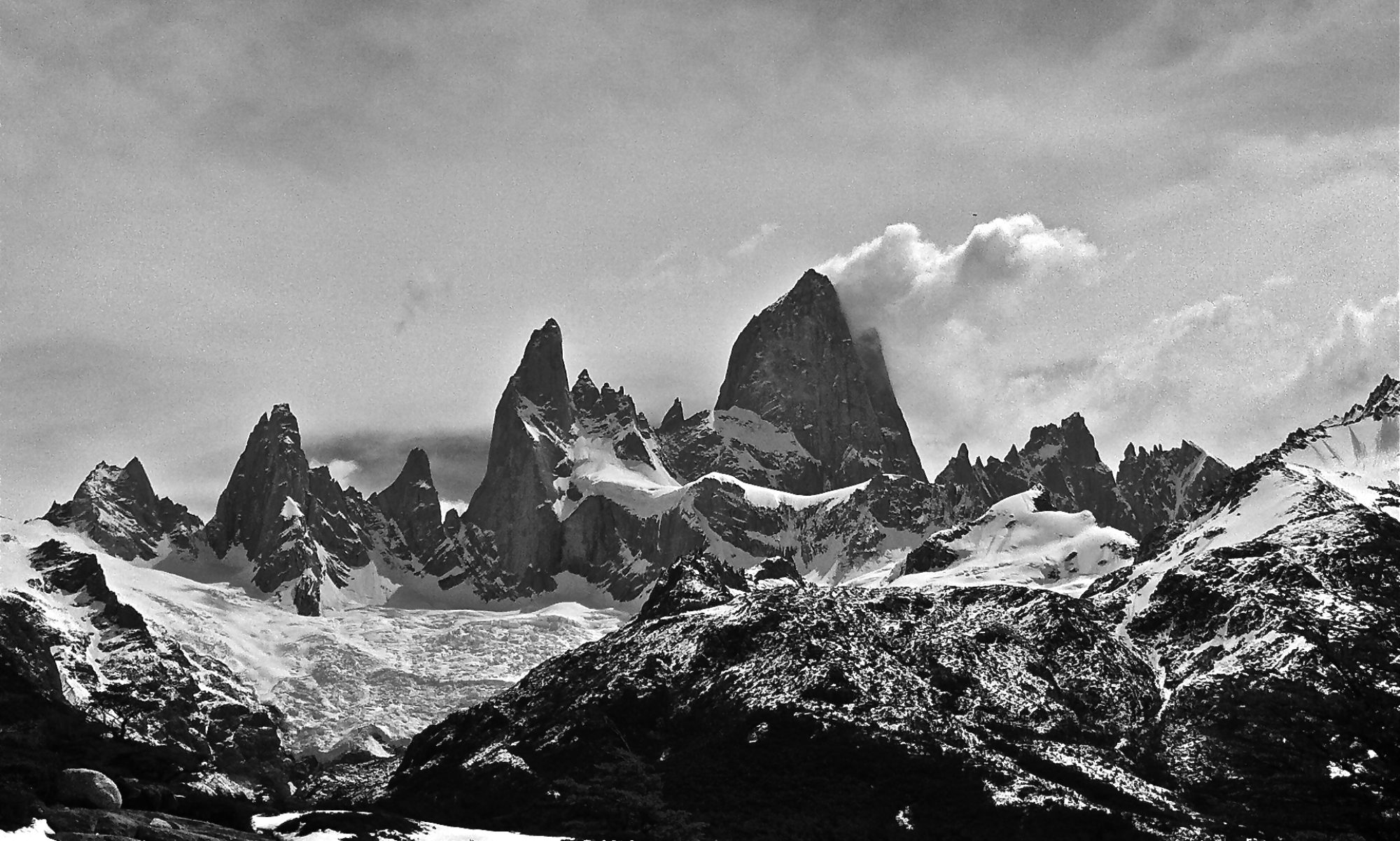
16. Argentina. 2010. A great trip to such a large and diverse country. We got our urban fix in Buenos Aires, wine country in Mendoza, the tropics at Iguazu Falls, and snow-covered hikes in Patagonia.

17. Chile. 2010. On the Argentina trip, we jumped over to Santiago for a weekend. Great city.

18. Kenya. 2013. The start of our Africa trip with two amazing safari camps.

19. Zimbabwe. 2013. Victoria Falls and rafting the Zambezi.

20. Botswana. 2013. Two more safari camps.

21. South Africa. 2013. Beautiful Cape Town and Johannesburg.

22. Panama. 2014. We did the tourist triangle: Panama City (and the canal), Boquete (mountain town) and Bocas (beach town).

23. Cuba. 2016. I’m not sure why I didn’t blog anything about this! We visited Havana and Viñales.

24. France. 2017. Our current trip. We just left today after visiting Paris and Bourdeaux. We drove to northern Spain.

25. Indonesia. 2017. After a week in Sydney, we headed to Bali for ~7 weeks early in our Big Trip.

26. Singapore. 2018. We did a quick weekend in Singapore to reset our Indonesia visas (valid for 30 days).

27. Fiji. 2018. We stopped in Fiji for a week in March on the way from New Zealand back to the US.

28. Guatemala. 2018. After a couple of weeks on the Yucatán peninsula we headed a bit further south.

29. Belize. 2018. We were two of three passengers on a small plane ride from Guatemala City to Belize City. We then hopped a ferry to Caye Caulker and spent a week on an island without cars with the motto “go slow.”

30. Portugal. 2018. After a one-day layover in London, we caught a flight down to Porto to start a couple of months in the Southwest of Europe and Northern Africa.

31. Morocco. 2018. We jumped over from Spain and explored Marrakech and Fez along with some day trips to other cities and towns.

32. Columbia. 2019. We spent a month (February into March) exploring.

London, Paris, Bordeaux

We flew to London via Seattle on Monday/Tuesday, arriving about half 7. We had a 3p train to Paris, so with a few hours to kill, we took a train to central London (from Gatwick) and made our way to the Charles Dickens museum. It’s located in the first residence he had with his wife. We learned about his life, which included going to work in a factory at age 12 when his father was jailed in debtor’s prison. He only revealed this to a few close friends during his lifetime, but his works are full of his insights from the experience.

IMG_0007.jpg

The train to Paris went through the Chunnel, which was pretty cool in theory. In practice, it’s just a long dark tunnel. But knowing you’re going under the North Sea to reach mainland Europe is alright. I believe France is now country #23 on my list of countries visited. Upon arriving at the train station, we bought another train ticket for a local train to the place we’d booked. We met our friends Keith & Naomi (they flew in from JFK and arrived a few hours before us) and headed out for dinner and drinks.

IMG_0009.jpg

Day 2 in Paris was a LOT of walking. We went up a tower for a panoramic view of the city, crossed the river Seine multiple times, and enjoyed the Jardin du Luxembourg. Dinner wasn’t as good as the first night.

IMG_0010.jpg

On Thursday, we caught the bullet train to Bordeaux, hitting speeds around 200 mph. We like Bordeaux. It has amazing architecture, many pedestrian-friendly streets, people out and about everywhere, and plenty of places to pause for food and/or drink.

IMG_0012.jpg

Today, Friday, we drove our car out to Saint-Émilion – the heart of wine country. It’s a bit touristy, but what a postcard-perfect town! We (I) may have driven the rental car into a ditch (very obscured by weeds!) while trying to park on the side of the road. The front passenger side wheel may have dropped off the road, and the rear driver-side tire may have been a couple of feet off the ground. A friendly and helpful Frenchman may have stopped to give some assistance. I allegedly had Leena sit in the rear passenger side seat to help stabilize the car while the Frenchman pushed from the passenger side. A turn of the wheel while gunning it in reverse may have pulled it back out of the ditch.

This may have happened. Allegedly.

We did some tasting in town, mixing in a couple of cave tours. We had another great meal in Bordeaux tonight and are enjoying a Blanc de Noir we tasted and purchased in Saint-Émilion earlier today. We’re off to San Sebastián tomorrow.

IMG_0013.jpg

IMG_0014.jpg

IMG_0015.jpg

IMG_0016.jpg

IMG_0017.jpg

IMG_0018.jpg

IMG_0019.jpg

LeBron Chasing .500

LeBron James is approaching a .500 career FG%. This is remarkable considering how far from .500 he was at one point in his career.

I have game-by-game data (not shot-by-shot). Let’s start with:

  • He was last above .500 after two career games (20 for 37). Warning: small sample size!
  • His lowest career shooting shooting % came through 20 career games (.3988)

Here’s how his career FG% has progressed game by game.

But I would not consider game 20 with a .399 FG% to be his career low point relative to shooting .500. Far from it! A 40% shooter through just 20 games is much closer to .500 than a 47% shooter through 500 games (on a similar volume of shots/game). Here’s how I measure how “close” a player is to a .500 shooting percentage. Look at each game by shots above/below .500 (e.g. 12 for 20 is two shots above .500; 6 for 17 is 2.5 shots below .500). I’ll call this “.500 FG% +/-” or simply “+/-” for short.

By this measure we can evaluate each game:

  • Best game: +6 (13 for 14 in career game 734)
  • Worst game: -7 (3 for 20 in career game 140)

We can also measure how far above or below .500 a player is by +/- after each game. While LeBron was at his lowest career shooting percentage through 20 games, his +/- was only -32.5 at that point. He’d need to make 65 consecutive shots to get back to .500. When we look at his cumulative career +/- after each game, we find:

  • Highest career +/-: +2 (after game 1 – warning small sample size!)
  • Lowest career +/-: -309 (after game 591)

At that point, he needed to make 618 consecutive shots to get to .500. That’s much further away than 65 shots! I doubt any NBA player has ever dug out of such a big hole to become a .500 FG% shooter. (This could be a fun study for folks with the data – I’m looking at you STATS guys…)

Take a look at each season and his career +/- at the end of each season:

                            Career  Career
Season FGM  FGA  FG%  +/-     FG%     +/-
03-04  622 1492 .417 -124    .417    -124
04-05  795 1684 .472 - 47    .446    -171
05-06  875 1823 .480 - 36.5  .458    -207.5
06-07  772 1621 .476 - 38.5  .463    -246
07-08  794 1642 .484 - 27    .467    -273
08-09  789 1613 .489 - 17.5  .471    -290.5
09-10  768 1528 .503 +  4    .475    -286.5
10-11  758 1485 .510 + 15.5  .479    -271
11-12  621 1169 .531 + 36.5  .483    -234.5
12-13  765 1354 .565 + 88    .490    -146.5
13-14  767 1353 .567 + 90.5  .497    - 56
14-15  624 1279 .488 - 15.5  .496    - 71.5
15-16  737 1416 .520 + 29    .498    - 42.5
16-17  462  868 .532 + 28    .499    - 14.5

Though it looks like the low point of -309 came in 08-09 or 09-10, it actually came after a 7-24 performance in the 43rd game of 10-11 season. He was much better in the second half of that season.

Here’s how his career FG .500 +/- has progressed game by game.

First of all, the turnaround after the low point during the 10-11 season is really dramatic. Lebron was remarkably efficient over the next three and a half seasons.

After 13-14, it looked like he’d get to .500 in the second half of 14-15. But with a new team, new coach and new teammates, LeBron took a step back in 14-15. At that point, I figured he’d never make it; the aging process means his shooting efficiency is bound to fall off at some point. But he got back on the plus side of the ledger in 15-16, and has been even better so far in 16-17.

He is currently the closest he’s been to .500 by +/- since career game 13 (-12). He’s -14.5 with a career mark of .4993. With 8 consecutive makes he’ll move above .4995 which rounds to .500. But he needs 29 consecutive makes to truly get to .500.

How long will it take? Well, he’s made up 14.5 shots in just his last 9 games going a torrid 94 for 159. It certainly looks like he’ll get there before the end of the season.

UPDATE: LeBron finished the 16-17 season as a career .501 shooter. Here are the numbers through the end of the season:

UPDATE: LeBron finished the 17-18 season as a career .504 shooter.

                              Career  Career
Season   FGM  FGA  FG%  +/-     FG%     +/-
03-04    622  1492 .417 -124    .417    -124
04-05    795  1684 .472 - 47    .446    -171
05-06    875  1823 .480 - 36.5  .458    -207.5
06-07    772  1621 .476 - 38.5  .463    -246
07-08    794  1642 .484 - 27    .467    -273
08-09    789  1613 .489 - 17.5  .471    -290.5
09-10    768  1528 .503 +  4    .475    -286.5
10-11    758  1485 .510 + 15.5  .479    -271
11-12    621  1169 .531 + 36.5  .483    -234.5
12-13    765  1354 .565 + 88    .490    -146.5
13-14    767  1353 .567 + 90.5  .497    - 56
14-15    624  1279 .488 - 15.5  .496    - 71.5
15-16    737  1416 .520 + 29    .498    - 42.5
16-17    736  1344 .548 + 64    .501    + 22.5
17-18    857  1580 .542 + 67    .504    + 89.5

Defining “success” for Northwestern’s 2016 football season

Posted on insidenu.com:
https://www.insidenu.com/2016/8/23/12618842/defining-success-for-northwesterns-2016-football-season

This expands a bit on a comment I made on the “Wildcat Shootaround: What would you consider a successful season for Northwestern?” post.

Heading into last season, would anyone have thought 10 wins wasn’t a successful season? Yet some of the definitions of success for this season would deem last year unsuccessful. Right off the bat, Zach gives three criteria, and last year met NONE of them.

(Zach’s criteria were: “First, beat Iowa. Second, have no blowout losses. Third, win a bowl game.”)

Success is highly contextual. I graduated in 1994. A winning season back then would have been wildly successful. Three wins in some years felt like a success.

How do we create some context to define success? I built a simple model. I defined success as wins for the season (with no regard for margin of victory, number of games played, strength of schedule, etc). I used a 4-year weighted moving average (40/30/20/10) to give the over/under each season for wins needed to define success (Success Wins). Why four years? It’s the playing length of a standard college career; with a few exceptions, a roster turns over every four years.

I expanded the data set to go back to the start of the Ara Parseghian era; this correlates pretty closely to the formation of the Big Ten.

Season Coach Record Success Wins Success? +/-
1956 Ara Parseghian 4-4-1 1.4 yes 2.6
1957 Ara Parseghian 0-9 2.3 no -2.3
1958 Ara Parseghian 5-4 1.4 yes 3.6
1959 Ara Parseghian 6-3 2.8 yes 3.2
1960 Ara Parseghian 5-4 4.3 yes 0.7
1961 Ara Parseghian 4-5 4.8 no -0.8
1962 Ara Parseghian 7-2 4.8 yes 2.2
1963 Ara Parseghian 5-4 5.6 no -0.6
1964 Alex Agase 3-6 5.4 no -2.4
1965 Alex Agase 4-6 4.5 no -0.5
1966 Alex Agase 3-6-1 4.2 no -1.2
1967 Alex Agase 3-7 3.5 no -0.5
1968 Alex Agase 1-9 3.2 no -2.2
1969 Alex Agase 3-7 2.3 yes 0.7
1970 Alex Agase 6-4 2.4 yes 3.6
1971 Alex Agase 7-4 3.8 yes 3.2
1972 Alex Agase 2-9 5.3 no -3.3
1973 John Pont 4-7 4.4 no -0.4
1974 John Pont 3-8 4.2 no -1.2
1975 John Pont 3-8 3.5 no -0.5
1976 John Pont 1-10 3.1 no -2.1
1977 John Pont 1-10 2.3 no -1.3
1978 Rick Venturi 0-10-1 1.6 no -1.6
1979 Rick Venturi 1-10 0.8 yes 0.2
1980 Rick Venturi 0-11 0.7 no -0.7
1981 Dennis Green 0-11 0.4 no -0.4
1982 Dennis Green 3-8 0.2 yes 2.8
1983 Dennis Green 2-9 1.3 yes 0.7
1984 Dennis Green 2-9 1.7 yes 0.3
1985 Dennis Green 3-8 2 yes 1
1986 Francis Peay 4-7 2.5 yes 1.5
1987 Francis Peay 2-8-1 3.1 no -1.1
1988 Francis Peay 2-8-1 2.8 no -0.8
1989 Francis Peay 0-11 2.5 no -2.5
1990 Francis Peay 2-9 1.4 yes 0.6
1991 Francis Peay 3-8 1.4 yes 1.6
1992 Gary Barnett 3-8 2 yes 1
1993 Gary Barnett 2-9 2.5 no -0.5
1994 Gary Barnett 3-7-1 2.5 yes 0.5
1995 Gary Barnett 10-2 2.7 yes 7.3
1996 Gary Barnett 9-3 5.6 yes 3.4
1997 Gary Barnett 5-7 7.4 no -2.4
1998 Gary Barnett 3-9 7 no -4
1999 Randy Walker 3-8 5.5 no -2.5
2000 Randy Walker 8-4 4 yes 4
2001 Randy Walker 4-7 5.2 no -1.2
2002 Randy Walker 3-9 4.9 no -1.9
2003 Randy Walker 6-7 4.3 yes 1.7
2004 Randy Walker 6-6 4.9 yes 1.1
2005 Randy Walker 7-5 5.2 yes 1.8
2006 Pat Fitzgerald 4-8 6.1 no -2.1
2007 Pat Fitzgerald 6-6 5.5 yes 0.5
2008 Pat Fitzgerald 9-4 5.6 yes 3.4
2009 Pat Fitzgerald 8-5 6.9 yes 1.1
2010 Pat Fitzgerald 7-6 7.5 no -0.5
2011 Pat Fitzgerald 6-7 7.6 no -1.6
2012 Pat Fitzgerald 10-3 7 yes 3
2013 Pat Fitzgerald 5-7 8 no -3
2014 Pat Fitzgerald 5-7 6.9 no -1.9
2015 Pat Fitzgerald 10-3 6.1 yes 3.9
2016 Pat Fitzgerald 7.5

You get a successful season about half the time. I’m OK with that, though I’d guess some people think that’s too easy a hurdle to clear. But to me it means we’re moving in an overall positive direction, and that’s successful.

The Success Wins for 2016 is 7.5. Seems about right for where we are right now. For the 2016 season, 8 wins = success.

Interesting to note that NU’s high-water mark for Success Wins came after the 2012 season at 8.0. If we win 8 games this year, next year’s mark would be 7.7. But if we win 9 games, it moves to 8.1. We are at or near the peak of the program.

We’re not talking about the low-water mark.

What are our most successful seasons? Here are the top 10.

Season Coach Record Success Wins +/- Rank
1995 Gary Barnett 10-2 2.7 7.3 1
2000 Randy Walker 8-4 4 4 2
2015 Pat Fitzgerald 10-3 6.1 3.9 3
1958 Ara Parseghian 5-4 1.4 3.6 4
1970 Alex Agase 6-4 2.4 3.6 4
1996 Gary Barnett 9-3 5.6 3.4 6
2008 Pat Fitzgerald 9-4 5.6 3.4 6
1959 Ara Parseghian 6-3 2.8 3.2 8
1971 Alex Agase 7-4 3.8 3.2 8
2012 Pat Fitzgerald 10-3 7 3 10

Our 1995 season may well be the all-time college football most “successful” season by this metric. Feel free to leave a comment with any outlier seasons you can think of for other teams and we’ll see how they compare. Pat Fitzgerald has three of Northwestern’s top 10 seasons since 1956.

We can use this to rank coaches too. What Success Win level did they inherit, and what Success Win level did they leave?

Coach Seasons Start End +/- Rank
Ara Parseghian 1956-63 1.4 5.4 4 1
Gary Barnett 1992-98 2 5.5 3.5 2
Dennis Green 1981-85 0.7 2.5 1.8 3
Pat Fitzgerald 2006- 6.1 7.5 1.4 4
Randy Walker 1999-2005 5.5 6.1 0.6 5
Francis Peay 1986-90 2.5 2 -0.5 6
Rick Venturi 1978-80 1.6 0.7 -0.9 7
Alex Agase 1964-72 5.4 4.4 -1 8
John Pont 1973-77 4.4 1.6 -2.8 9

I don’t think anyone would put Dennis Green that high, but given the context of what he inherited, it makes some sense. It gives a lot of credit to Barnett (as it should!) for turning things around and taking us up a few levels. Randy Walker moved it up a bit more, and Pat Fitzgerald has taken the program to its highest point yet. If you ranked coaches by the absolute (not relative) level they achieved, Fitzgerald is #1.

I did notice that after the 2014 season, we were at 6.1, exactly what Fitzgerald inherited. There was a segment of the fan base (at least one person!) who felt we were stuck. Then 2015 got us moving back in a positive direction.

How does this look for B1G play? Our Success Conference Wins for 2016 is 4.0, though that’s based on an 8-game slate. That’s a .500 win percentage for 8 games, so we can convert that to 4.5 wins for the 9-game 2016 slate.

How does every team in the Big Ten look?

Team 2012 2013 2014 2015 2016 Rank
Ohio State 12 12 14 12 12.6 1
Michigan State 7 13 11 12 11.4 2
Wisconsin 8 9 11 10 9.9 3
Iowa 4 8 7 12 8.9 4
Nebraska 10 9 9 6 7.9 5
Michigan 8 7 5 10 7.7 6
Northwestern 10 5 5 10 7.5 7
Penn State 8 7 7 7 7.1 8
Minnesota 6 8 8 6 7 9
Rutgers 9 6 8 4 6.1 10
Maryland 4 7 7 3 5.1 11
Indiana 4 5 4 6 5 12
Illinois 2 4 6 5 4.8 13
Purdue 6 1 3 2 2.5 14

Wow, Ohio State. Just win 13 games to be successful! Or, anything short of the playoff is not a successful season. That’s crazy. Michigan seems low, but my model doesn’t know that they hired Jim Harbaugh to replace Brady Hoke. Wisconsin seems high. LOL Illinois. Northwestern’s above average! Seems reasonable for where we are at this point.

TL;DR Success for the 2016 Northwestern football season is 8+ total wins, 5+ conference wins. With 9 wins, the program will be at its best level ever. THE MODEL HAS SPOKEN.

Goodbye Milo

Today we say goodbye to the sweetest beagle ever, Milo Faust. Gentle, playful, kind, curious, stubborn, and a bit of a troublemaker! We remember taking him back to the breeder to board him a few times when he was a puppy, and while she bred and boarded many dogs, she let us know that he was one of the few that won her over and got to sleep in her bedroom. He loved the beach. He loved chasing his ball in the yard, and when the weather didn’t allow it, we played inside. He chased a raccoon out of the house that one time and got a bit over his head in the fight, but came through with just a few scrapes. He was always anxious when we left him for he just wanted to be with his people. He leaves us on his 14th birthday. 4/17/02 – 4/17/16. Sweet dreams little buddy.

Boquete to Bocas and Home

We were off the grid for most of the remainder of the Panama trip, but here’s an after-the-fact recap of the rest of the trip.

We spent a couple more days in Boquete. We toured the Cafe Ruiz coffee plantation, learning plenty about the various processes for drying and roasting coffee beans, the ideal coffee growing conditions in Boquete, and Panama’s place in worldwide coffee production. They emphasize light and medium roasts at Cafe Ruiz. Delicious.

We took a car shuttle from Boquete to Bocas Del Toros on the Caribbean side. The shuttle actually dropped us in Almirante where we took a water taxi to Bocas followed by another water taxi to Al Natural eco resort on Bastimentos.

The resort can host something like 20 people, and we made great friends there. The family-style dinner each night brought together travelers from Costa Rica, America, Spain, Germany, France, Japan, and more. (I’m sure I’m forgetting some.) We spent the days hiking, snorkeling, finding dolphins, touring a local indigenous village (Salt Creek), and relaxing. There may have been some cocktails in there, and there were definitely some beautiful sunsets.

We returned to Panama City for a final day. We stayed in an amazing flat is Casco Viejo that was perfect except for the nearby church with loud church bells every 15 minutes for most of the day. We loaded up on ceviche, had a great meal at Manolo Caracol, and stayed in during a few amazing downpours.

Until next time!

Boquete Waterfalls

We took a short flight yesterday from Panama City to David, then took an 80 minute bus ride to Boquete. The bus was super crowded, cheap, and full of locals.

We grabbed a late lunch in town at Mike’s Global Grill and we lucked out: it was Mike’s birthday. Instead of the normal high price of $1.25, the beers were $.44 in honor of Mike’s 44th.

Boquete is a relatively small mountain town with a sizable US ex-pat community. I guess the AARP recommended it as a retirement spot some years ago. It is a lovely setting. Today we did a couple of waterfall hikes. Each took a couple of hours.

Panama Canal

We booked a boat tour of the Panama Canal and started with a 40 minute bus ride to Gamboa, a town on the Southern end of Gatun Lake. The lake was formed by damming the Chagres River, a river that flows to the Atlantic. At the time it was created, it was both the largest dam on the planet and the largest man-made lake. (Today, Lake Powell is larger.)

We headed south towards the Pacific (and Panama City). The canal crosses the Continental Divide at the Gaillard Cut, the largest excavation needed for the canal.

Gatun Lake is 85 feet above sea level, and there are three locks in each direction to get to sea level. Each lock is 1000 feet long, 110 feet wide, and 39 1/2 feet deep. The largest vessels that can navigate the canal are basically the dimension of the locks with all of two feet of clearance on each side. Such vessels are called Panamax. Here’s such a vessel in the first lock heading to the Pacific.

Each lock holds 26 million gallons of water yet takes just 8 minutes to fill or empty. Here’s our boat in the first lock before the lock empties.

Here we are ~30 feet lower after the lock has emptied.

The canal operates 24×7 and completes an average of 42 transits a day. An average transit takes 8-10 hours; a transit around the Cape takes ~22 days. Panamax-size ships can only fit one at a time through the Gaillard Cut, so there’s a daily schedule to manage traffic. Each vessel is boarded by a Canal Captain at the start of transit who navigates the vessel through the entire canal. Large vessels are also required to be escorted by tug boats. An engine failure at the wrong time could be catastrophic – running aground could close the canal.

The Bridge of Americas at the Pacific entrance is one of two bridges across the canal (the other was pictured at the Continental Divide).

More canal info:

  • 35% of commercial boats in operation are too big for the canal. A second set of locks is set to open in 2016. These will be 1400 feet long, 180 feet wide, and 50 feet deep. The expansion cost has passed $5B.
  • The canal employs 9000 people full-time.
  • Transit is generally first come, first serve. Today, the wait to transit is ~24 hours.
  • The minimum fee to use the canal is $3k. Our 120 foot boat was $4k. A typical Panamax boat is $120k. It was noted, though, that boats that size use ~$100k in fuel each day, so it’s very economical to use the canal. The largest fees go to cruise ships and can be more than $400k. Fees are based on size and cargo; passengers command a premium fee.
  • The 3-mile causeway built at the Pacific entrance to the canal used about 10% of the material excavated for the canal.
  • The original canal proposed by the French was a sea-level canal. Such a canal, however, would not be commercially viable. At the canal location, the Atlantic has tides of just 1 to 2 feet while the Pacific has tides up to 20 feet. This would have created dangerous currents.

Panama City Day 2

We headed to El Parque Metropolitano on Friday morning. It’s an urban park with a few simple hikes that promised views of the city and the canal. We hiked 45 minutes to the viewpoint and had a view of the city but couldn’t see the canal.

Lunch called for a visit to El Mercado de Mariscos – the fish market. Lots of fish!

Yes, of course we got ceviche!

We spent the afternoon walking southeast along the Pacific waterfront and exploring the downtown neighborhood. We grabbed some Italian before heading back to our neighborhood for the evening.

Panama City Day 1

We flew to Panama City via Dallas and Miami on Wednesday, arriving a bit past 10p local time. It wasn’t too hard to fall asleep on Eastern time since we’d gotten up at 4a for an early departure from Portland.

We’re staying near the Pacific entrance to the canal. There’s a 5k causeway that was constructed to connect the mainland to a few small islands and create a harbor (and calm water) at the entrance to the canal. We walked to the end of the causeway. We could see a bunch of huge ships lined up to enter the canal, but only saw a couple go in. No doubt there’s a lot of logistics on who gets to go in and when.

We grabbed some lunch – ceviche, empanadas and camorones (shrimp), tried a few of the local brews (Atlas and Panamá), then took a cab over to El Casco Antiguo.

El Casco Antiguo was built from 1673 after the original site of Panama City (a few kilometers east) was destroyed. The architecture is European; it feels like the French Quarter in New Orleans. We started in La Plaza de Francia.

We spent the afternoon walking the streets and poking our heads in a few shops. We checked out El Museo del Canal. It was entirely in Spanish! Fortunately, Leena minored in Spanish and I took cuatro años in high school, so we managed to put together most of the story. We actually just missed the 100-year anniversary of its opening (August 1914). To summarize a bit… The French started the project, but abandoned it – the project was costing too much in both money and lives. The US took another 10 years to finish the canal. Even today, it would take a monumental engineering effort, so it’s remarkable that it was completed a century ago. We also learned about some of the political history, including US military bases. The ownership by the US and lack of revenue for Panama from the canal boiled over in the late 60s in riots that numbers more than 250,000 people. Jimmy Carter eventually signed a renegotiated treaty that did in fact hand over control of the canal to Panama in 1999. Panama holds Carter in high regard for this; the act was described as an act of political suicide.

El Casco Antiguo is situated on a peninsula and looks across at the modern downtown. Panama City is the largest city in Central America with over 1 million residents.

Random sighting: a guy was riding his skateboard while being towed along by his dog – a beagle! Oh, hey, it’s also really hot and humid here!